

Subtotal د.إ0.00

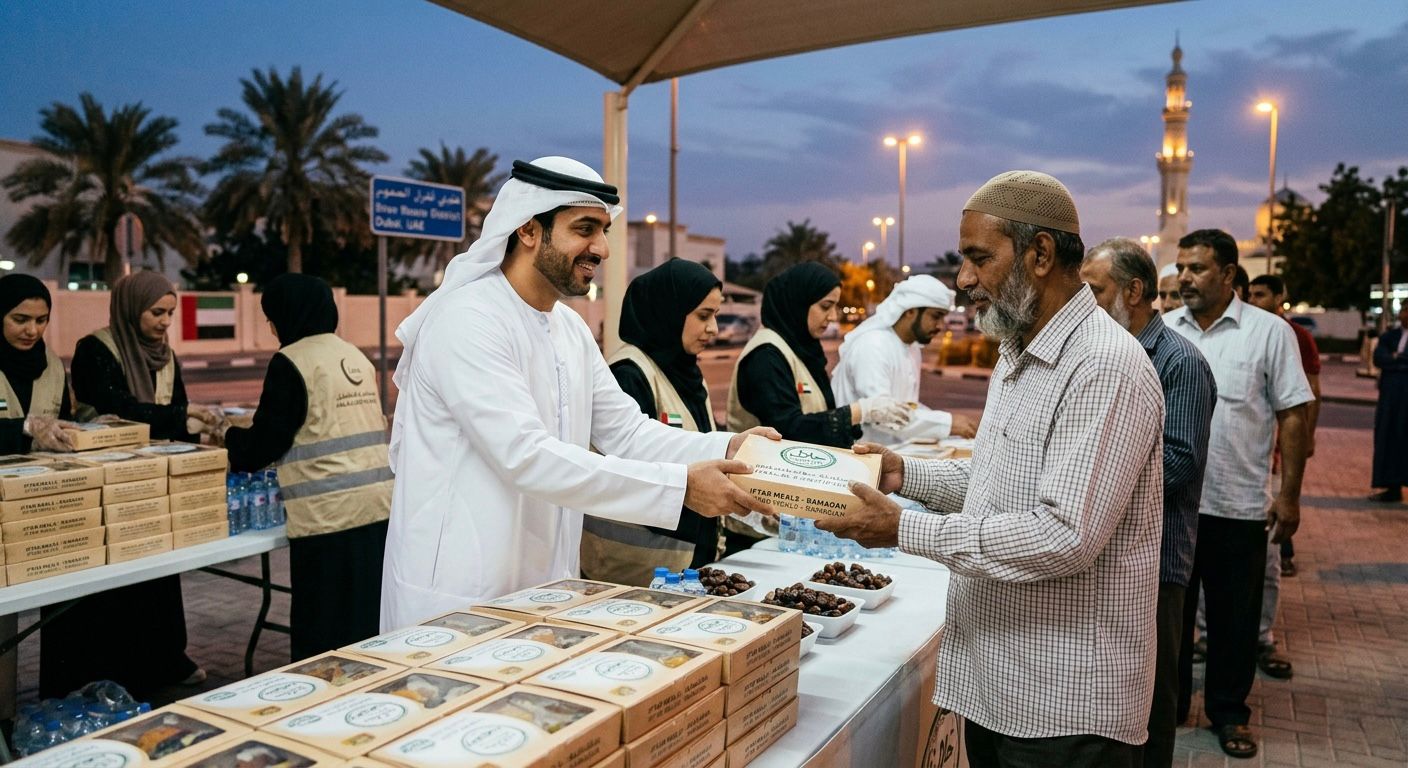
To execute a large scale iftar meal distribution during Ramadan needs following a well-defined system and adhering to local food safety standards and religious norms. This simple and comprehensive halal certification guide UAE is exclusively designed for corporate organizations and individual sponsors looking to distribute Ramadan iftar meals in a responsible way while adhering to key regulatory compliance rules and building community trust.
The Role of Halal Certification in Iftar Meal Distribution in UAE
During Ramadan, the need to consume ready-to-eat Ramadan Iftar meals increases to a significant level especially due to increased corporate sponsored charity initiatives. Halal certification ensures that meal distribution aligns well with local dietary laws. This certification also builds credibility and ensures that the meal beneficiaries benefit from standardized meals.
For key charity groups and corporate sponsors, gaining halal certification is not just a religious requirement, it is an ethical and legal responsibility that protects the brands’ reputation and streamlines meal distribution operations across the United Arab Emirates.
Key Steps Involved in Getting Halal Certification
Here are the key steps involved:
1. Submission of the Application
You are required to apply to an approved UAE halal certification authority. Your application requires your business details, information about your food categories and expected scale of meal distribution.
2. Preparing Necessary Documentation
The relevant authority will review your meal ingredients, their sourcing, meals preparation methods and hygiene standards and will prepare a report document.
3. Inspection of the Facility
An inspection will be conducted to evaluate key food preparation areas, cooking processes, food storage and meal handling practices.
4. Approval of the Certification
Once key legal compliance standards are verified, you will get certification that will allow you to distribute halal approved meals during the month of Ramadan.
Key Costs Involved in Halal Certification
The halal certification cost UAE may vary that mainly depends on several factors, including business size, food items and the charges set by the certification authority. Main costs that may be included are:
- Registration and application submission fee
- Annual renewal charges
- Inspection Fee
To organize large scale meal distribution projects, allocation of budget and proper planning can ensure a streamlined execution during peak Ramadan operation.
Key Requirements that Need to Br Fulfilled
To get halal certification successfully, business companies need to meet a specific criteria as outlined below:
- They should use halal-certified ingredients
- They must separate halal and non-halal items
- They should follow proper food handling and storage practices
- They need to strictly comply with UAE’s food safety standards
When this key criteria is met, it reflects that your iftar meals align with religious norms and legal regulations.
Selecting the Right Meal Provider is the Game Changer Strategy
Collaborating with experienced and trusted iftar meal suppliers can further ease your certification process. A well-reputed meal supplier can ensure quality control. Experienced suppliers strictly adhere to local halal guidelines and maintain high standards of hygiene and food safety.
Choosing the right meal provider helps maintain food quality, consistent meal portions and timely meal delivery.
Advantages of securing Halal Certification
Securing halal certification provides multiple benefits for corporate sponsors:
- Enhances their brand’s image and CSR credibility
- Builds trust among the meal beneficiaries and the key stakeholders
- Strongly supports a streamlined execution of Ramadan charity campaigns and Friday charity meal distribution.
- Strengthens brand’s credibility in the business market
- Ensures compliance with local rules
- Ensures the charity campaigns are smoothly executed
For large scale meal distributions, following UAE halal certification process becomes a crucial requirement in the UAE.
Conclusion
Securing halal certification for iftar meals can help key sponsors, charity organizers and individual donors in the UAE to legally organize and execute Ramadan meal distribution campaigns with ease. This simple halal certification Guide UAE explains the importance of legal compliance, choosing the right meal provider and proper planning for distributing iftar meals. By carefully understanding the process to arrange halal meals, managing costs and meeting the key legal standards, halal certification ensures your Ramadan charity efforts are legally compliant. It also reflects you are operating ethically and responsibly.
By following a few simple steps, corporate sponsors in the UAE can create a meaningful impact in the lives of the needy. Such legally organized Ramadan food programs strongly promote a deep sense of community and a culture of generosity in the competitive business landscape of Dubai.
To organize halal distribution campaigns, you can explore endless Ramadan iftar meal options to create a meaningful impact throughout the blessed month.