


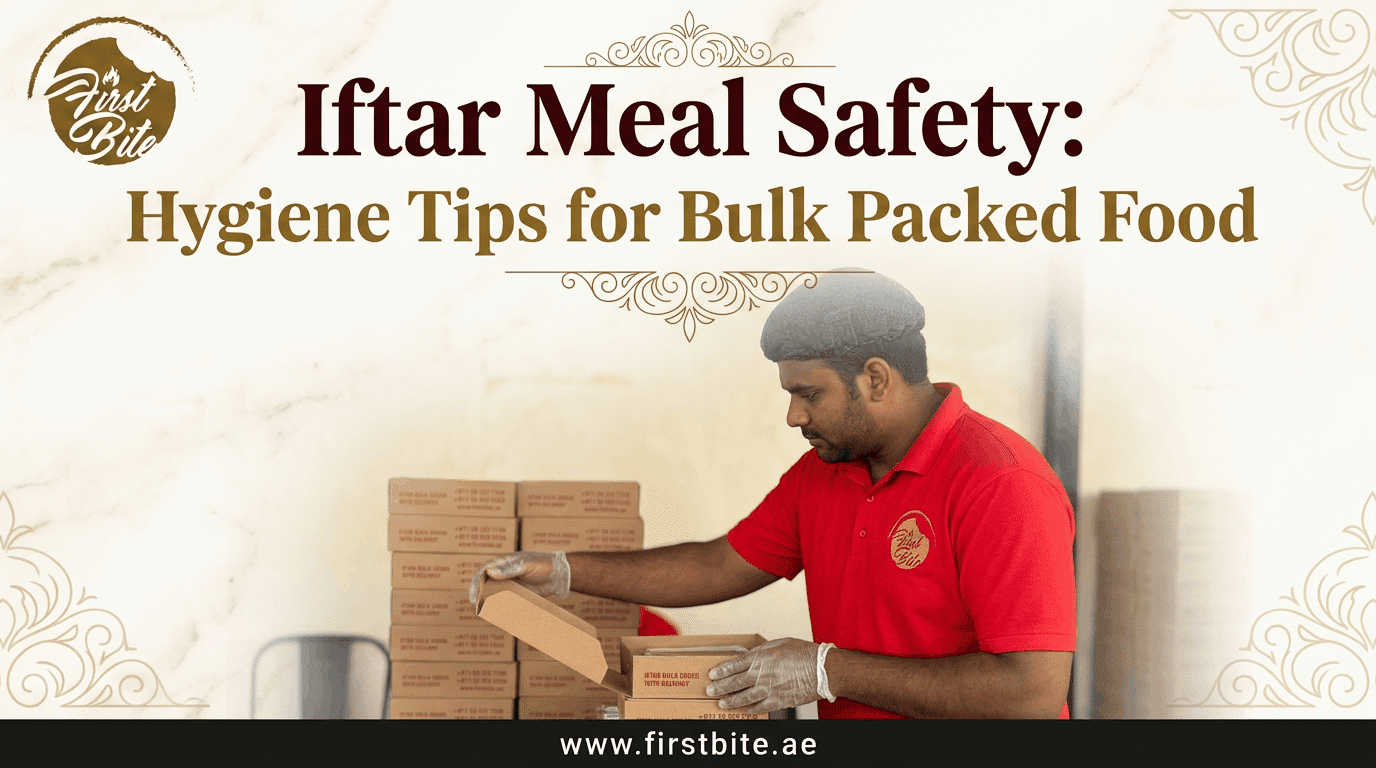
Imagine thousands of workers who are fasting are sitting down at a sunset and ready to break their fast. Just think of a single batch of boiled rice ruining this very important moment. During Ramadan many kitchens cook at huge volumes, under tough shifts and tight deadlines, so mistakes are very common. That’s why iftar meal safety comes first. Whether you are cooking large volume meals or ordering them during Ramadan, these hygiene tips help you keep every box safe and iftar time peaceful.
Why is Following Food Safety Practices Important?
People break the fast after sustaining many hours without food. They often eat quickly when iftar time is reached. Large portions and weak stomachs make any contamination more harmful. The hot weather of Dubai and preparing meals in a short kitchen window multiply risks. Good food hygiene protects your customers and builds your reputation.
Start with a Licensed Kitchen
Safe and good hygiene starts from the kitchen. Select a kitchen that is properly licensed by the relevant authorities and is also regularly inspected. A safe kitchen will have:
- Dedicated areas for cooked and raw food
- Clean and sanitized equipment and surfaces
- Proper pest control and ventilation
- Hand washing areas are clean with well-equipped hand cleaners.
Ask the meal providers to show their recent inspection and relevant licenses regularly. A well-reputed kitchen will be happy to share such documents.
Keep Food Safety and Strict Hygiene Protocols
Food providers have to ensure are the most important safety protocols while preparing meals. Their every team member should:
- Wear clean uniforms, hairnets, gloves and masks where required
- Wash hands before starting work, after touching raw food or after the breaks.
- Keep nails short and avoid jewelry in the kitchen
- Stay home if they are sick
Short training sessions before Ramadan meal preparations can help seasonal staff to control standards and understand crucial cleanliness and food safety rules from day one.
Control Temperature at Every Stage
Bacteria can grow fast between 5°C to 60°C, so the temperature and time control are the critical factors for bulk packed food. You need to follow these basic guidelines:
- Cook food thoroughly: Meat, rice and chicken dishes should be fully cooked before they are packed.
- Keep cold food cold: Store yogurt, salads and desserts at or below 5°C.
- Keep hot food hot: Store cooked meals above 60°C until they are packed.
- Cool food quickly: Don’t leave cooked meals at room temperature for long. Spread large meal batches into shallow trays so they can cool faster.
- Use thermometers: Check and record the food temperature instead of guessing.
Meat, rice and curries deserve extra care because large pots stay warm for a long time and that allows bacteria to grow.
Handle Meal Packaging with Care
Food packaging is your final safeguard against contamination. Use food grade, clean and sealed containers that can prevent contamination and leaks. Let hot food cool slightly before sealing to prevent steam and soggy rice. Pack hot and cold food items separately and label each box or batch with preparation time and contents so you can trace any problem. Don’t reuse single use containers.
Safe Storage and Careful Delivery
Safe food preparation can be undone if the delivery is poor. Use covered and clean vehicles and insulated boxes. Plan meal delivery close to sunset so food doesn’t have to sit for hours. While receiving meals, keep the food boxes in a cool, clean and shaded area, away from direct sun and serve them with care soon after arrival. If food has been left for a long time or smells or looks wrong, it’s better not to serve.
Handling Allergies and Dietary Needs Safely
You need to clearly list the ingredients, especially the common allergens such as eggs, gluten, dairy and nuts. Keep allergen free meals separate and well-marked. This can prevent serious problems.
Conclusion
Iftar meal safety depends mainly on practicing a few simple habits like choosing a well reputed and properly licensed kitchen, following key food safety protocols, strict staff hygiene, controlling temperature, safe storage and packaging ensuring timely delivery. Follow these steps and every packed meal box will be safe and delicious.
Frequently Asked Questions
What temperature should hot food be kept at?
Hot food should be kept above 60°C until it is packed and delivered. Cold items should stay at or below 5°C.
Can I reheat packed meals?
Don’t reheat food repeatedly. You can do it only once. Heat it until steaming hot all the way through.
How can I tell if a meal provider follows food safety rules?
Ask for their license and inspection records. Carefully inspect how they store and transport food. Well reputed providers will answer clearly.
Comments are closed